The AI Revolution in Healthcare Has a Billing Problem Nobody Is Talking About
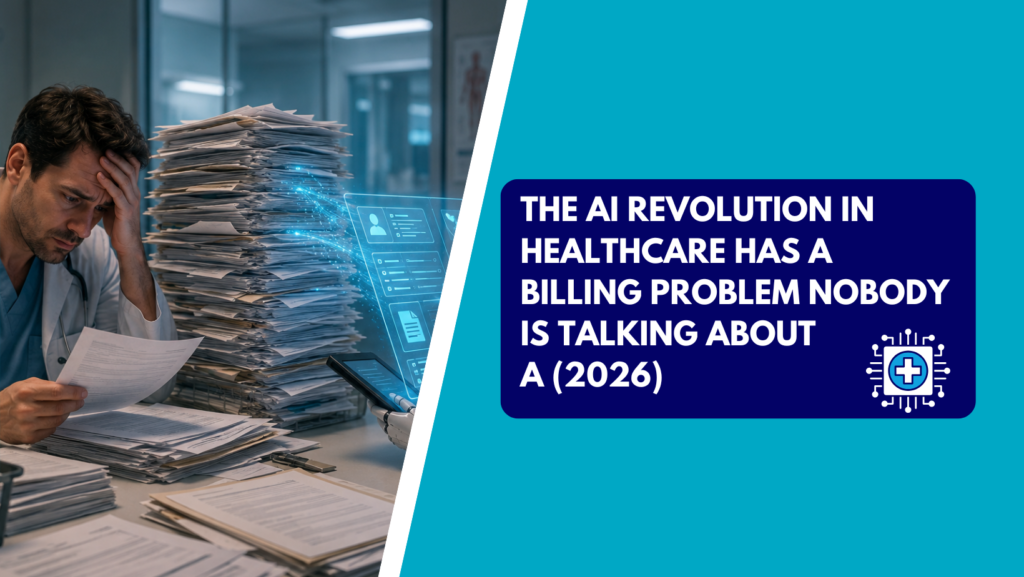
Healthcare billing has never been simple. Between payer-specific coding requirements, prior authorization workflows, compliance mandates, and ever-shifting insurance reimbursement rules, medical providers have always operated in one of the most administratively demanding industries in the world.
Now, artificial intelligence is being positioned as the solution. Vendors promise automated claims scrubbing, predictive denial management, and intelligent coding assistance that will cut costs and eliminate manual errors. And frankly, some of those promises are real.
But AI in medical billing also introduces a new and growing set of challenges that most vendors will not tell you about upfront. For physicians, medical practices, behavioral health clinics, ABA providers, and urgent care centers, understanding these challenges before you invest is the difference between recovering lost revenue and losing more of it.
At CareRCM, we work with healthcare providers every day to navigate exactly this landscape. What follows is an honest, practice-focused look at what AI can and cannot do in revenue cycle management, and how to protect your collections either way.
Is Your Practice Losing Revenue to Billing Gaps?
Request a free consultation and let CareRCM assess your revenue cycle performance at no cost.
Before examining the challenges, it is worth being precise about what AI tools in medical billing actually do, because the category covers a wide range of technologies with very different maturity levels.
| AI Function | What It Does | Maturity Level |
|---|---|---|
| Automated Claims Scrubbing | Reviews claims pre-submission for coding errors, missing modifiers, and documentation gaps | Mature — widely available |
| Predictive Denial Management | Flags claims likely to be denied based on payer behavior patterns | Growing — quality varies by vendor |
| Prior Authorization Automation | Drafts and submits prior auth requests, tracks status, generates appeal letters | Emerging — payer support limited |
| Coding Assistance via NLP | Reads clinical notes and suggests ICD-10, CPT, and HCPCS codes | Mature — human review still essential |
| Patient Payment Estimation | Calculates expected patient responsibility based on insurance verification data | Mature — highly useful for upfront collections |
| Payer Contract Analytics | Analyzes reimbursement trends and flags underpayments against contracted rates | Emerging — high value when accurate |
Providers using AI-assisted billing have reported measurable improvements in first-pass claim acceptance rates and reductions in days in accounts receivable. But the financial and operational reality of deploying these tools is significantly more complicated than vendor pitch decks suggest.
Most AI billing tools do not charge a flat monthly fee. They charge based on usage: per claim processed, per document analyzed, per coding suggestion generated. This mirrors the pricing model of the underlying AI infrastructure, and it creates a fundamental budgeting problem for practices of all sizes.
Consider a mid-sized orthopedic group. Volume fluctuates seasonally and can spike 30 to 40 percent in a matter of weeks when a new surgeon joins or a payer contract changes. Under per-claim AI pricing, that spike translates directly into an unpredictable cost increase, often with no warning until the invoice arrives.
Expert Tip
Build a 20 to 25 percent buffer above your projected AI tool costs in your annual technology budget. Demand volume-tiered pricing, monthly caps, and real-time usage dashboards from any AI billing vendor before you sign a contract.
- Demand volume-tiered pricing or monthly cost caps from AI vendors
- Request detailed usage dashboards so billing managers can monitor consumption in real time
- Include AI tool costs in your annual revenue cycle budget with a documented contingency buffer
- Compare total cost of ownership against outsourced RCM services, which offer predictable flat-rate or percentage-based pricing
When an AI-assisted claim is denied, accountability becomes complicated fast. Traditional denials have clear causes: a missing modifier, a non-covered service, a credentialing lapse. AI-assisted denials can be murkier.
If an AI tool suggested a code that a human biller accepted and the payer denies on the basis of medical necessity, was that the AI’s error, the clinician’s documentation, or the biller’s judgment? Most AI billing tools offer limited explainability. They can tell you what they recommended, but not always why with enough detail to support a clean appeal.
For Medicare and Medicaid claims especially, where audit trails and documentation standards are strict, this opacity creates serious compliance exposure. OIG audits and RAC reviews look at the reasoning behind coding decisions, and an AI tool that cannot explain its logic is not a defense.
What Providers Should Do
- Require vendors to provide decision logs for every AI-generated coding recommendation
- Ensure your compliance program explicitly covers AI-assisted billing, including who reviews and owns each AI suggestion before submission
- Never eliminate the human review step, even when AI confidence scores appear high
- Document your internal review process as evidence of clinical oversight for audit purposes
Commercial payers revise their prior authorization requirements, fee schedules, and medical necessity criteria on their own timelines, often with minimal advance notice to providers.
AI billing tools are trained on historical data. When a payer changes a rule, the AI model may not reflect that change until it is retrained, which can take weeks or even months. In the interim, your AI tool may continue submitting claims under outdated rules and generating a wave of preventable denials.
This challenge is especially acute in specialties with high prior authorization burdens: oncology, radiology, behavioral health, surgical subspecialties, and ABA services.
Ask every AI billing vendor directly: How quickly are payer rule changes incorporated into your model, and how are practices notified when updates occur? If they cannot answer with specifics, that is your answer.
- Maintain a parallel manual process for monitoring payer policy updates
- Track denial reason codes by payer and flag sudden spikes that might indicate an AI model lag
- Partner with an RCM expert who monitors payer changes proactively and applies them to your claims workflow immediately
AI billing tools do not work in isolation. They require connections to your EHR, your practice management system, your clearinghouse, and sometimes your payer portals directly. Integration is where many implementations stumble, and where budgets quietly collapse.
Most practices underestimate integration costs by a factor of two or three. What is marketed as a seamless connection with major EHR platforms often requires significant IT support, custom API work, and months of configuration. Smaller practices without in-house IT staff are especially vulnerable, discovering post-contract that integration requires a third-party consultant whose fees were never included in the original quote.
| Integration Scenario | Real-World Cost Impact |
|---|---|
| EHR API access fees (charged by EHR vendor) | Often $2,000 to $10,000+ annually — not included in AI tool pricing |
| Custom API development for non-standard EHRs | Typically $5,000 to $30,000+ in consultant fees |
| Staff training and workflow redesign | 20 to 40 hours of lost productivity per biller during transition |
| Ongoing maintenance and version updates | Recurring costs as EHR and AI platforms update independently |
| Data migration and validation testing | Often underestimated by 50 to 70 percent by practices during budgeting |
- Get integration scope and cost in writing, including any fees charged by your EHR vendor for API access
- Request references from practices using the same EHR who have already successfully integrated the AI tool
- Negotiate a phased implementation with clear milestones and exit clauses if integration targets are not met on schedule
Here is a challenge that almost never appears in vendor pitch decks: your billing staff may not trust the AI, and their quiet workarounds can undermine the entire investment without anyone realizing it.
When billers do not trust AI-generated codes or recommendations, they override them silently, accepting the suggestion on screen but re-coding in the next step, or simply ignoring the tool’s flags. The result is a practice paying for AI it is not actually using, while simultaneously obscuring the data that would help evaluate whether the AI is accurate.
The opposite failure is equally dangerous. When staff over-trust the AI and stop applying clinical judgment, errors compound silently until they surface as audit findings or compliance issues.
- Invest in training that explains how the AI works, not just what buttons to press. Billers who understand the logic are measurably more likely to use it appropriately
- Create a structured feedback process for flagging AI recommendations that seem incorrect, and actually route that feedback to the vendor for model improvement
- Track AI override rates as a key performance indicator. A biller overriding recommendations 60 percent of the time is a data point worth investigating
- Set clear policies about which AI recommendations require mandatory human review before submission
AI billing tools process protected health information at scale. Clinical notes, diagnosis codes, patient demographics, and insurance data all flow through these systems every day. That creates significant HIPAA compliance obligations that many providers do not examine closely enough before signing a vendor contract.
Critical HIPAA Questions to Ask Every AI Billing Vendor
Is the vendor a covered Business Associate, and do you have a signed BAA on file?
Where is PHI stored: on-premises, domestic cloud, or internationally?
Is patient data used to retrain the AI model, and do your patients' authorizations cover that use?
What is the vendor's breach notification timeline and documented response process?
Can they provide a current SOC 2 Type II audit report and HIPAA risk assessment?
Regulators are paying closer attention. The HHS Office for Civil Rights has signaled increased scrutiny of AI-related HIPAA compliance, and several state attorneys general have issued guidance on AI and health data privacy. This is not an area where providers can afford to assume their vendor has it handled.
- Require a completed Business Associate Agreement before any PHI enters an AI system, no exceptions
- Have your privacy officer or legal counsel review the vendor’s data use policy with specific attention to model training clauses
- Ask for the vendor’s most recent SOC 2 Type II audit report and HIPAA risk assessment before finalizing any contract
- Document your vendor evaluation process as part of your compliance program
Key Takeaways
- AI in medical billing delivers real efficiency gains, but hidden costs, integration gaps, and compliance risks can erode those gains quickly.
- Consumption-based pricing models create unpredictable expenses that many practices fail to budget for accurately.
- AI models lag behind payer rule changes, making human oversight and parallel monitoring processes essential.
- HIPAA compliance in AI billing is your responsibility, not your vendor's assumption.
- Staff training and structured feedback loops are as important as the AI technology itself.
- Expert RCM partners provide the human judgment layer that no AI tool can fully replace.
Healthcare organizations across the country partner with CareRCM because we understand that revenue cycle management is not a software problem. It is a people, process, and technology problem that requires genuine expertise to solve. We bring all three.
| What Providers Need | How CareRCM Delivers It |
|---|---|
| Predictable, transparent billing costs | Flat-rate and percentage-based pricing with no surprise consumption fees or hidden integration charges |
| Denial management that actually recovers revenue | Proactive denial prevention plus aggressive appeals management with documented recovery rates |
| Payer rule monitoring and compliance | Dedicated specialists who track Medicare, Medicaid, and commercial payer updates and apply them immediately |
| HIPAA-compliant data handling | Fully executed BAAs, SOC 2 compliant infrastructure, and documented HIPAA risk management |
| Specialty-specific billing expertise | Deep experience in behavioral health, ABA, urgent care, primary care, and surgical specialties |
| Credentialing and enrollment support | End-to-end provider credentialing that eliminates enrollment delays and revenue gaps |
| Real-time reporting and visibility | Custom dashboards showing collections performance, denial trends, and AR aging by payer |
When you work with CareRCM, you gain a revenue cycle partner that combines the efficiency benefits of modern billing technology with the expert human oversight that protects your practice from the risks that AI alone cannot manage.
Ready to Protect and Grow Your Practice Revenue?
CareRCM offers a complimentary revenue cycle assessment with no obligation.
Discover where your practice is leaving money on the table.
Our approach to revenue cycle management is built on three pillars: comprehensive claims accuracy, proactive denial prevention, and continuous performance improvement. Here is what that looks like in practice.
Clean Claims from Day One
Every claim submitted through CareRCM goes through multi-level review before it reaches a payer. Our billing specialists verify coding accuracy, payer-specific rules, prior authorization requirements, and documentation completeness before submission. This approach consistently achieves first-pass acceptance rates significantly above the national average.
Denial Management That Recovers Revenue Others Write Off
Most practices write off denied claims because they lack the bandwidth to work them. CareRCM operates a dedicated denial management team that categorizes, appeals, and tracks every denial to resolution. We identify the root causes driving your denials and correct them upstream, not just claim by claim.
Credentialing and Enrollment That Protects Your Revenue Continuity
Provider credentialing delays are one of the most underestimated sources of revenue loss in medical practices. A provider who cannot bill because enrollment is incomplete costs your practice thousands of dollars per week. CareRCM manages the entire credentialing lifecycle, from initial applications to revalidations and contract negotiations.
Compliance You Can Document
Our billing practices are built around coding compliance, HIPAA data protection, and audit readiness. Every coding decision made on your behalf is documented, reviewable, and defensible. You will never face an audit and wonder what your billing company was doing.
Transparent Reporting That Drives Decisions
CareRCM provides healthcare organizations with real-time performance reporting on collections, AR aging, denial rates, and payer trends. You see exactly where your revenue is coming from, where it is being lost, and what is being done about it.
Frequently Asked Questions About AI in Medical Billing
-
AI billing tools and professional RCM services are not mutually exclusive, but they serve different functions. AI tools automate specific tasks within a billing workflow. Professional RCM companies like CareRCM provide the complete workflow: coding expertise, denial management, payer follow-up, credentialing, compliance oversight, and human judgment at every step. For most medical practices, the combination of expert RCM management with appropriate technology integration produces far better financial results than AI tools deployed without experienced oversight.
-
Common indicators include a denial rate above 5 to 8 percent, AR aging with more than 20 percent of balances over 90 days, a first-pass claim acceptance rate below 95 percent, or frequent write-offs of denied claims. If you recognize any of these patterns, a revenue cycle assessment from CareRCM can quantify exactly how much revenue your practice is leaving on the table and what it would take to recover it.
-
CareRCM provides specialized medical billing and revenue cycle management for primary care, behavioral health, ABA therapy providers, urgent care centers, surgical practices, physical therapy, and a wide range of outpatient specialties. Each specialty requires unique coding knowledge, payer-specific expertise, and compliance awareness that generic billing solutions cannot reliably provide.
-
CareRCM operates as a fully compliant Business Associate under HIPAA. We execute Business Associate Agreements with every client practice, maintain SOC 2 compliant data infrastructure, and conduct regular internal HIPAA risk assessments. All staff handling protected health information receive documented HIPAA training, and our systems are designed to minimize PHI exposure at every workflow stage.
-
Most practices begin seeing measurable improvements in clean claim rates and denial resolution within the first 60 to 90 days. Because we handle credentialing, denial follow-up, and AR cleanup simultaneously during onboarding, practices with significant backlog often see meaningful revenue recovery within the first billing cycle.
-
CareRCM offers transparent pricing structures based on the size and complexity of your practice. Unlike AI billing tools with unpredictable consumption-based fees, our pricing is straightforward. More importantly, most practices recover significantly more in collections than the cost of our services within the first few months. We encourage every practice to request a free consultation to discuss what pricing would look like for their specific situation.
Key Takeaways
- AI billing tools offer real efficiency gains but introduce hidden costs, explainability gaps, and HIPAA risks that require expert oversight.
- Payer rule changes consistently outpace AI model updates, making human monitoring essential.
- Integration costs are routinely underestimated by 50 to 70 percent during initial vendor evaluations.
- Staff training and structured feedback processes are as critical as the AI technology itself.
- Professional RCM partners like CareRCM provide the compliance layer, denial management expertise, and human judgment that AI tools alone cannot deliver.
Schedule Your Free Appointment Now
Offering painless billing with premium benefits at unbeatable rates. Get our medical billing services at a fraction of your total monthly collections and discover the difference of this partnership within days.
Schedule Now